
UK based workshop floor specialists
Workshop Flooring in the UK
Key Considerations for Workshop Flooring
- Load-Bearing Capacity: Must support workbenches, machinery, and vehicle traffic.
- Flatness & Levelness: Ensures safe and efficient workspace operations.
- Slip Resistance: Reduces accidents and improves safety.
- Resistance to Wear & Chemicals: Protects against oil, fuel, and solvents.
- Ease of Maintenance: Facilitates quick cleaning and upkeep.
Floor Screeding for Workshops
To create a durable and level surface, workshop floors often require high-performance screeds. The choice of screed depends on the workshop environment and usage.
Types of Screed Used in Workshops
1. Traditional Sand & Cement Screed
- Offers a strong, durable surface.
- Can be reinforced with fibres for added strength.
- Longer drying times (up to 28 days).
2. Liquid Screed
- Self-levelling, providing a smooth finish.
- Faster drying – walkable within 24-48 hours.
- Ideal for large workshop spaces.
3. Fast Drying Screed
- Modified with additives for quick drying.
- Suitable for rapid workshop refurbishments.
- Can be ready for use in 12-48 hours.
4. Epoxy & Resin Screeds
- Highly resistant to chemicals and impact.
- Durable and easy to clean.
- Often used in automotive and industrial workshops.
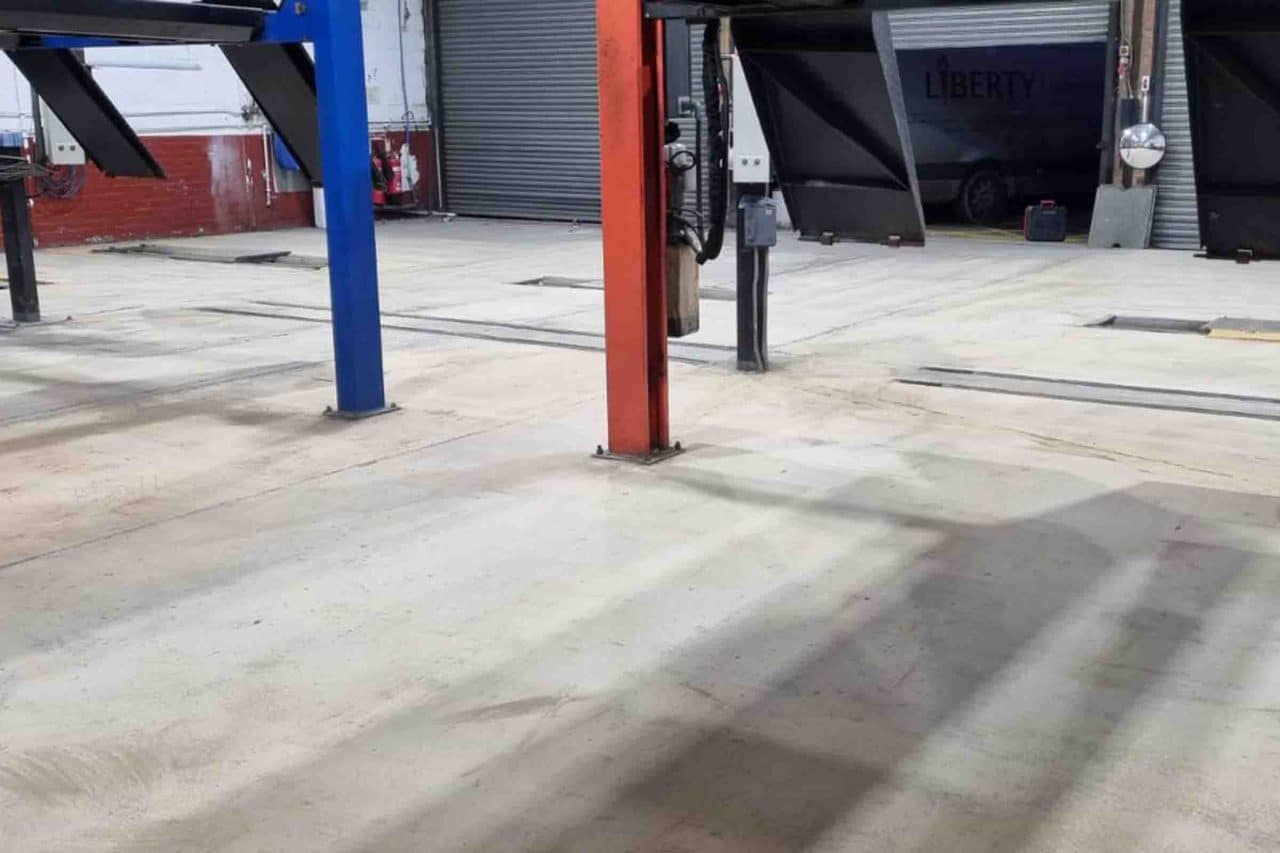
Concrete Floor Preparation for Workshops
Before applying screed, the concrete surface must be properly prepared to ensure long-lasting performance.
Key Steps in Floor Preparation
- Surface Cleaning: Removes dust, grease, and contaminants.
- Laitance Removal: Grinding or shot blasting to remove weak surface layers.
- Crack & Joint Repair: Filling in gaps and stabilising damaged areas.
- Moisture Testing: Ensures the substrate is dry enough for screed application.
- Priming: Enhances screed adhesion to the substrate.
Equipment Used in Workshop Flooring
- Diamond Grinders: Used for smoothing and laitance removal.
- Shot Blasters: Creates a textured surface for better screed bonding.
- Power Floats: Helps achieve a polished finish.
- Vacuum Systems: Keeps the worksite dust-free.
“Durable, smooth, and resistant to heavy machinery, tools and potential chemical spills”
Conclusion
Workshop flooring in the UK requires a strong, level, and durable surface to withstand high foot traffic, machinery, and potential chemical exposure. Choosing the right screed and ensuring thorough floor preparation are essential for long-term performance.
Comparison Table: Screed Types for Workshop Flooring
| Feature | Traditional Screed | Liquid Screed | Fast Drying Screed | Resin Screed |
|---|---|---|---|---|
| Installation Speed | Slow | Fast | Very Fast | Moderate |
| Drying Time | Up to 28 days | 24-48 hours | 12-48 hours | Varies |
| Strength | High | Moderate | High | Very High |
| Chemical Resistance | Low | Moderate | Moderate | Very High |
| Best Use Cases | General workshops | Large workshop areas | Fast-track workshop refurbishments | Heavy-duty and industrial workshops |
Residential & Commercial
floor screeding
Workshop flooring services in the Midlands
Commercial floor screeding
Warehouse flooring
It will enhance the structural integrity, prevent cracks, and ensure a smooth base for final floor finishes like epoxy coatings or polished concrete.
Floor preparation
We use dust-free, vacuum-assisted diamond grinding equipment to grind concrete surfaces, effectively removing imperfections and providing a smooth base for new coatings