
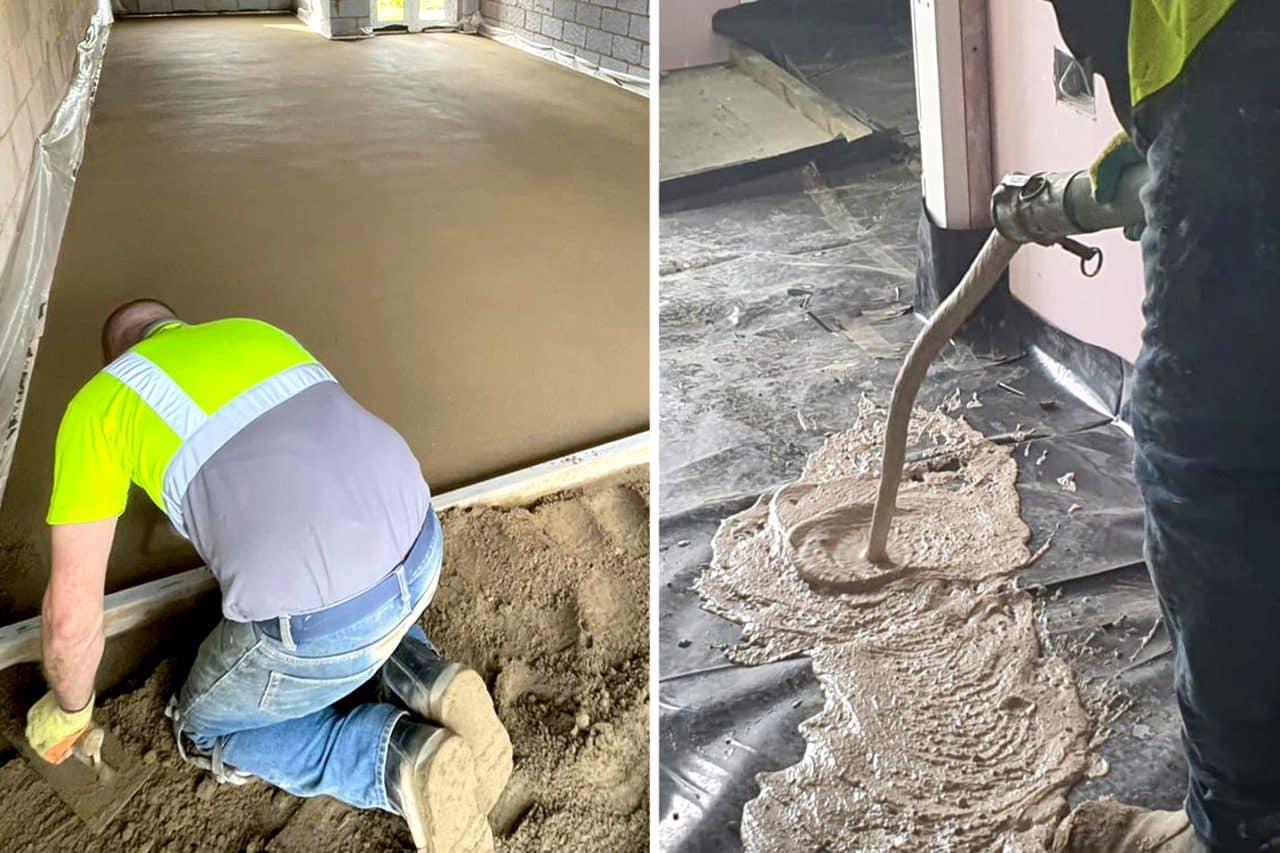
Traditional screed vs Liquid screed
The benefits of liquid Screed vs traditional screed
Floor screeding resources
When choosing a floor screeding method, two main options are liquid screed and traditional sand and cement screed. Each has its advantages depending on the project’s requirements, including drying time, application process, and compatibility with underfloor heating.
What is Traditional Screed?
What is Liquid Screed?
Liquid or traditional ? We consider the pros and cons of each method
“Traditional screed remains a practical choice for smaller projects and budget-conscious applications”
Key Benefits of Liquid Screed
- Faster Application: Can be pumped directly, reducing labour time.
- Improved Heat Transfer: More efficient with underfloor heating.
- Smoother Finish: Requires little to no additional leveling.
- Minimal Shrinkage: Reduces risk of cracking.
- Thinner Application Possible: Allows for reduced build-up height.
Key Benefits of Traditional Screed
- Lower Material Cost: More affordable per square meter.
- Suitable for Small Areas: Ideal for minor repairs and domestic projects.
- Easy to Work With: No specialist equipment required.
Which Screed Should You Choose?
The choice depends on your project’s needs:
- For fast installation, improved thermal efficiency, and smooth finish: Liquid screed is the best option.
- For small-scale projects, budget-conscious applications, and traditional construction methods: Traditional screed remains a viable choice.
Comparison of Liquid Screed vs. Traditional Screed
| Feature | Liquid Screed | Traditional Screed |
|---|---|---|
| Application Process | Pumped onto the floor, self-leveling | Manually applied and leveled |
| Drying Time | Faster drying (1mm per day up to 40mm) | Slower drying (1mm per day up to 40mm, 0.5mm per day beyond 40mm) |
| Thickness | Can be laid thinner (typically 25mm+ over insulation) | Requires a thicker application (50mm+) |
| Strength | Higher compressive strength | Durable but requires more thickness |
| Underfloor Heating | Better heat conductivity, fully surrounds pipes | Less efficient, may leave air gaps around pipes |
| Shrinkage & Cracking | Minimal shrinkage | Higher risk of cracking if not properly cured |
| Labour & Installation Speed | Faster installation with minimal manual work | Labour-intensive, slower installation |
| Cost | Higher initial cost but less labour required | Lower material cost but more labour-intensive |
“Liquid screed can be pumped directly, reducing labour time”
Conclusion
Liquid screed offers superior performance in terms of speed, finish, and compatibility with underfloor heating, making it ideal for modern construction.
Traditional screed, however, remains a practical choice for smaller projects and budget-conscious applications. Understanding the differences helps in selecting the right screed type to achieve a long-lasting and efficient flooring solution.